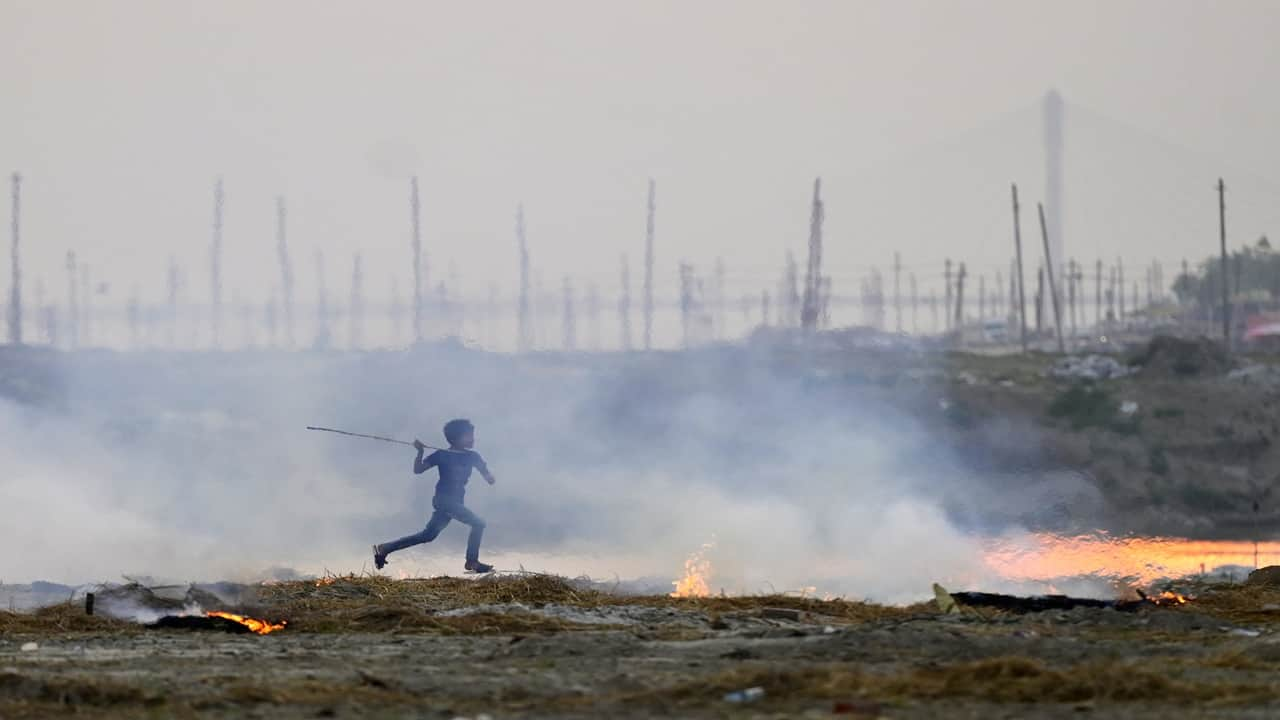
EVERY $1 INVESTED CAN RETURN $15: THE ECONOMIC CASE FOR CLEANER AIR IN INDIA
Cleaning up the air could deliver an economic windfall, with every dollar invested in tackling air pollution and climate change potentially generating US$15 in economic benefits, a new United Nations assessment has found.
The report, Hidden assets: The economic and health case for climate and clean air action, released on September 7, finds that 25 measures addressing both crises could deliver substantial returns, even before accounting for harder-to-measure benefits such as improved quality of life.
Even on a narrower measure, the gains remain significant - every US$1 invested could generate around US$4 in direct market benefits, including lower healthcare costs and higher worker productivity.
For India, where air pollution remains a persistent problem across major cities, the findings add an economic dimension to the country’s clean-air push.
India has made progress, but the gap remains
The timing is significant.
On September 7, the government released its latest assessment of India’s clean-air programme, showing that pollution levels have fallen in many cities.
Under the National Clean Air Programme (NCAP), 108 of 130 cities recorded lower annual PM10 concentrations in 2025-26 than in the 2017-18 baseline.
The reduction was more than 20% in 72 cities and more than 40% in 26 cities. Yet only 14 of the 130 cities met the prescribed national ambient air-quality standard for PM10.
The Centre has provided Rs 16,423.55 crore to these 130 cities between FY2019-20 and FY2025-26 through performance-linked grants. Cities have reported utilisation of Rs 11,575.54 crore, or 70.5%, of the funds.
The numbers show that targeted interventions can reduce pollution. They also underline how far India still has to go.
Why the UN is putting a GDP value on clean air
The key shift in the UN report is that it treats cleaner air as an economic asset rather than simply a regulatory objective.
Pollution creates costs long before they appear in government budgets. A worker falling ill can mean lost productivity. A child developing asthma can mean years of medical expenses. Pollution-related heart disease, stroke and respiratory illnesses add to healthcare costs while reducing the productive capacity of the workforce.
The report also factors in less easily measured losses, including quality of life.
Taken together, these costs make the economic return from reducing pollution much larger than conventional calculations suggest.
The assessment estimates that implementing its 25 measures would require investment equivalent to 0.7% of global GDP over the coming decade. The cost would decline to around 0.5% of GDP by the end of the century.
The benefits, however, could rise to 2.8% of global GDP by 2035, 4.5% by 2050 and 11.4% by 2100, if implementation begins immediately.
The report puts the internal rate of return at around 60%. It also says direct market benefits alone would exceed implementation costs within 10 years.
For countries such as India, where pollution exposure is high and health systems face a large disease burden, the economic argument could be particularly relevant.
South Asia has one of the biggest payoffs
The regional numbers strengthen that case.
The UN assessment puts the benefit-cost ratio for South Asia at 21:1. In other words, the economic benefits of implementing the proposed measures are estimated to be 21 times their cost in the region.
One of the biggest near-term opportunities identified for South Asia is clean cooking.
The report's 25 measures also include cleaner transport, tighter industrial and vehicle emission standards, better agricultural practices, reduced open burning, improved waste management, methane controls and greater use of renewable energy.
The idea is to address several sources simultaneously rather than treating climate policy and air-quality policy as separate exercises.
According to the report, combining the two approaches generates an additional 0.2% of global GDP in economic benefits because some gains materialise only when both problems are tackled together.
Delhi shows why the economic argument matters
National Capital Delhi provides a stark illustration of the challenge India faces.
Air quality in the capital typically begins deteriorating from October onwards, as cooler temperatures, weaker winds and atmospheric conditions make it harder for pollutants to disperse. The problem intensifies through the winter months.
The city's pollution is also not caused by a single source.
A 2026 study by TERI, A-PAG and IIT Delhi found that the transport sector contributes around 18-24% of Delhi's PM2.5, with heavy-duty trucks accounting for about 23% of transport-related PM2.5 emissions. Their contribution rises sharply during early morning and night hours.
Delhi's position as a major logistics hub adds to the challenge, with large volumes of interstate freight traffic moving through the city and surrounding NCR.
This is precisely the kind of problem the UN report argues requires integrated intervention. Cleaner vehicles alone cannot solve it if industrial emissions, construction dust, waste burning, household fuels and other sources continue to add to the pollution load.
The health bill is also a productivity bill
The UN estimates that outdoor human-caused PM2.5 and ground-level ozone contributed to 6.4 million premature deaths globally in 2025. Household air pollution accounted for another 2 million.
PM2.5 exposure was also associated with millions of new cases of childhood asthma, heart attacks, chronic obstructive pulmonary disease, diabetes, strokes and dementia.
The report says these diseases account for roughly one in five new cases of each condition globally.
Around 95% of premature deaths attributed to air pollution occur in low- and middle-income countries.
For India, the significance goes beyond mortality statistics. A large disease burden translates into healthcare expenditure, lost working days and lower labour productivity.
This is why the report describes avoided health costs and productivity gains as economic objectives in their own right.
India is already attacking several of the sources
The government's September 7 assessment lists interventions across transport, industry, construction, waste, agriculture and urban infrastructure.
India has moved to BS-VI vehicle standards, expanded electric mobility initiatives and introduced measures for fleet modernisation. In Delhi-NCR, authorities are also pushing cleaner public transport and tighter controls on older and more polluting vehicles.
Industrial units are being brought under continuous emissions monitoring, while new particulate emission norms for certain large and polluting industries are due to take effect from October 1, 2026.
Construction and road dust are another major target. The government says source-apportionment studies under NCAP indicate that construction and road dust can account for around 40-50% of PM10 in many Indian cities.
Agricultural burning has also been targeted. The government said paddy stubble-burning incidents fell by 93% in Punjab and 91% in Haryana in 2025 compared with 2021.
These interventions show where India's clean-air policy is heading: away from a single-city, single-source approach towards interventions across the entire pollution chain.
The cost of waiting
The UN report's strongest economic warning concerns delay.
It estimates that climate and clean-air measures are delayed by an average of eight years globally. Institutional problems, including fragmented decision-making, weak enforcement and poor coordination, account for around 2.4 years of that delay.
The economic cost is significant. Every year of delay is estimated to forfeit more than 0.5% of global GDP, or around US$1.5 trillion.
Conversely, speeding up implementation could generate up to US$10 trillion in cumulative savings from avoided illness by 2040, the report states.
That is particularly relevant for India, where responsibility for air pollution is spread across central ministries, state governments, municipal bodies and pollution-control authorities.
The National Clean Air Programme itself operates across 130 cities and involves multiple levels of government. The challenge, therefore, is not simply identifying what causes pollution. It is making different agencies act on those sources quickly and consistently.
Cleaner air could become an economic strategy
The UN's broader message is straightforward: governments should stop treating clean air as a cost centre.
Cleaner transport can reduce fuel use and pollution. Better waste management can curb emissions while improving urban services. Cleaner cooking can reduce household pollution and health costs. Industrial efficiency can cut both emissions and operating costs.
At the same time, reducing methane and carbon dioxide emissions helps limit future climate-related economic losses.
The report estimates that full implementation of the 25 measures could reduce carbon dioxide emissions by about half and methane emissions by around 60% by 2050. It could also avoid around 0.34°C of global warming by mid-century.
For India, the opportunity is, therefore, twofold - to reduce the immediate health and productivity costs of dirty air while limiting the longer-term economic damage from climate change.
2026-09-09T08:47:31Z